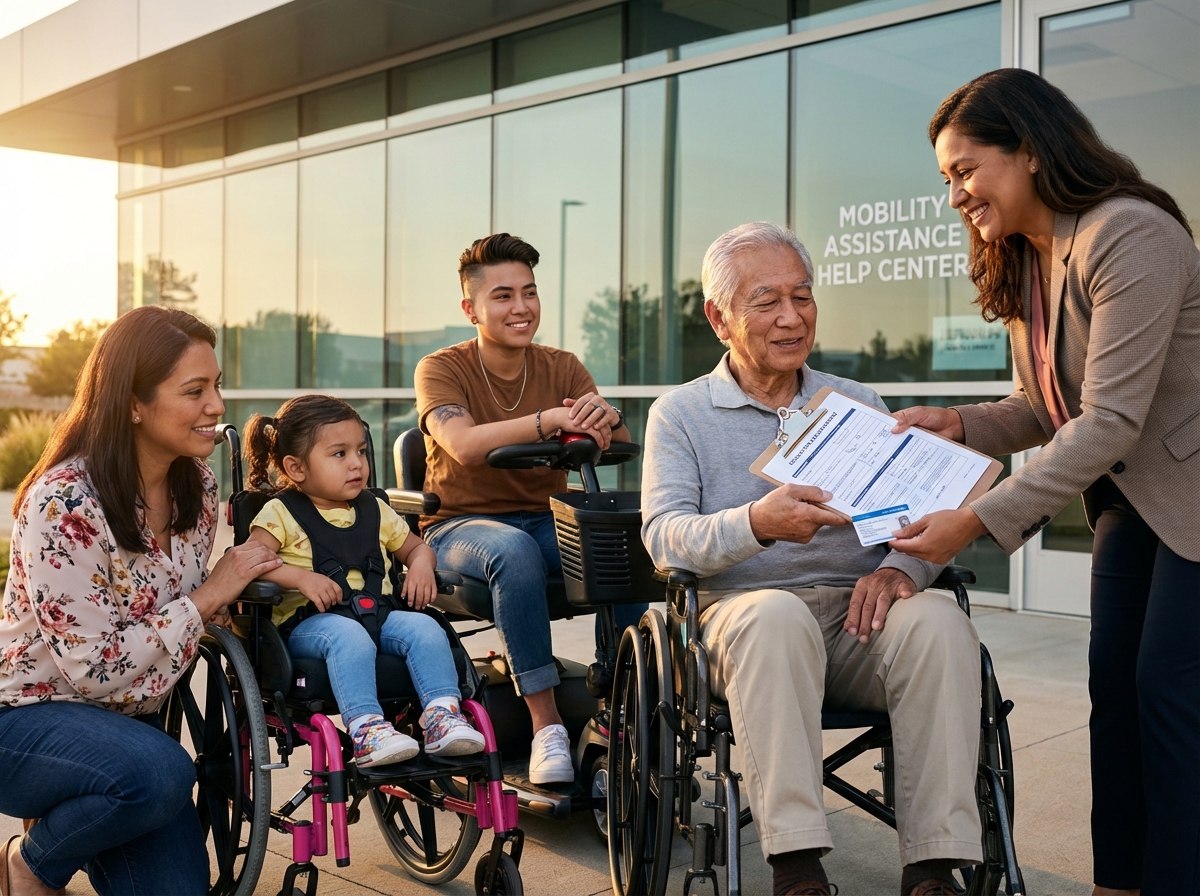
Finding funding for wheelchairs, scooters, and lifts requires juggling Medicare rules, private insurance, state programs, and national charities. This article maps the top national nonprofits that offer equipment grants or assistance, explains how insurance coverage works, and gives practical steps for applications, prior authorization, and appeals to help you get the mobility equipment you need.
Understanding the Funding Landscape for Mobility Equipment
Navigating the financial side of mobility equipment in the United States requires a clear understanding of several different systems. The landscape is a mix of federal programs, state initiatives, private contracts, and nonprofit support. Each piece of this puzzle has its own set of rules and limitations. Most people start with Medicare Part B because it serves as the foundation for durable medical equipment coverage. Currently, Medicare typically pays for 80 percent of the approved amount for manual wheelchairs or power scooters. This coverage only applies if the equipment is considered medically necessary for use inside the home. You are responsible for the remaining 20 percent after meeting your annual deductible. For 2024, that deductible is 240 dollars. This 20 percent gap can be a significant burden; a high-end power wheelchair might cost 15,000 dollars or more, leaving you with a 3,000 dollar bill even with good federal coverage.
Medicaid and state waiver programs offer a different layer of support designed for individuals with limited income. Unlike Medicare, Medicaid often covers the full cost of the equipment, though the process is not uniform across the country. Each state manages its own Medicaid program, and many now use Home and Community Based Services waivers to help people stay in their homes. These waivers can fund items that standard Medicaid might skip. Be aware that over 40 states now require prior authorization for power mobility devices. This means your doctor and supplier must submit extensive proof before the state agrees to pay. Wait times for these approvals have increased, and some states place caps on replacement frequency or repair costs.
State Assistive Technology Programs
Beyond standard Medicaid, every state operates an Assistive Technology (AT) program funded through the AT Act. You can find your state program through the RESNA directory. These programs often offer low-interest loans and equipment demonstrations. They are an excellent resource for testing different scooters or lifts before you commit to a purchase and can provide training on how to use new devices safely.
Private insurance companies follow their own internal logic. Most plans include a benefit for durable medical equipment, often with annual spending limits between 5,000 and 10,000 dollars. If your equipment exceeds this limit, you must pay the difference. Private insurers are also known for high denial rates; recent data indicates that a significant percentage of claims face initial denials due to documentation issues. They often require proof that a less expensive manual wheelchair will not work before approving a power scooter. You must stay within their network of approved suppliers to get the best rates, as using an out-of-network provider can double your out-of-pocket costs.
Veterans benefits through the VA are often the most comprehensive. If your disability is service-connected, the VA usually covers the entire cost, along with specialized training and home modifications. Even for non-service-connected issues, veterans can often get help through the VA healthcare system. Organizations like the Freedom Mobility Foundation work alongside these federal benefits to help active military members and first responders who might fall through the cracks.
The Critical Role of National Charities
National charities fill the gaps that insurance leaves behind, providing a safety net for specific situations. They often cover the 20 percent co-pay that Medicare does not pay or fund accessories that insurance labels as luxury items, such as specialized seating cushions or weather protection. Charities are also vital for people without any insurance. Some organizations provide outright grants or refurbished equipment at no cost. They act quickly during emergencies; if your primary chair breaks and insurance takes weeks to approve a repair, a charity might provide a loaner or a replacement immediately.
| Funding Source | Typical Coverage Level | Primary Limitations |
|---|---|---|
| Medicare Part B | 80 percent of approved cost | Requires use inside the home only |
| Medicaid Waivers | Up to 100 percent for eligible | Varies by state and income level |
| Private Insurance | 70 to 80 percent of cost | Annual caps and strict networks |
| National Charities | Variable grants or equipment | Based on specific diagnosis or need |
National charities offer advantages over local resources, which often have small budgets and limited inventory. National organizations have larger fundraising networks, can negotiate better prices with manufacturers, and possess expertise in specific conditions. For example, the American Wheelchair Mission focuses on delivering brand new chairs to those in physical need. These national groups often have streamlined application processes that local volunteer groups lack.
Current trends show a shift in how funding works. Foundation grants have grown to help with post-pandemic backlogs, with a heavy focus on veteran-specific programs. However, insurance companies are using more automated systems for reviews, leading to an increase in prior authorization denials. You must be diligent: always confirm the current rules with your Medicare Administrative Contractor, check with your state Medicaid office for local waiver updates, and visit charity websites to see if eligibility rules have changed. Documentation is your best tool for success in this environment.
How Medicare, Medicaid, and Private Insurance Treat Wheelchairs and Scooters
Medicare Part B handles wheelchairs and scooters under the category of durable medical equipment. This coverage is specific to items that serve a medical purpose and can withstand repeated use. It is important to know that Medicare only covers mobility equipment intended for use inside your home. They generally do not pay for heavy-duty scooters or power chairs if the primary goal is to use them outside or for community mobility.
The Physician Prescription and Medical Necessity
The process begins with a written order from your doctor. This prescription must state that you have a medical condition that makes it difficult to move around your house. Medicare requires the doctor to confirm that you cannot perform activities of daily living—such as getting to the bathroom or reaching the kitchen—with a cane or a walker. The documentation must show that a manual wheelchair is not sufficient or that you lack the upper body strength to operate one. If you are seeking a power wheelchair, the requirements are even stricter. Your medical records must prove that you can safely operate the controls and that the device will fit through your doorways.
The Face-to-Face Encounter
Medicare rules require you to meet with your physician in person before they can write the order. This encounter must happen within six months of the date on the prescription. During this visit, the doctor evaluates your physical limitations and documents them in detail. Many suppliers also suggest a functional assessment by a physical or occupational therapist. This therapist will often perform a timed walk test. If you can walk more than 150 feet without significant fatigue or shortness of breath, Medicare might determine that a power mobility device is not medically necessary. The therapist will also check your home environment to ensure the equipment can be used effectively in your living space.
Supplier Enrollment and Prior Authorization
You must use a supplier that is enrolled in Medicare and has a valid Medicare supplier number. If the supplier does not participate in the program, Medicare will not pay the claim. For power wheelchairs, Medicare now requires prior authorization before the equipment is delivered. The supplier submits the medical records and the prescription to Medicare for review. This step helps prevent surprise denials after the chair has already been ordered. Medicare usually covers the base frame and necessary batteries, as well as certain accessories like seat cushions if they prevent pressure sores. Repairs are covered for up to five years. After five years, the equipment is considered to have reached its useful life and you may be eligible for a replacement.
Medicaid and State Waiver Variations
Medicaid coverage for mobility equipment varies significantly from one state to another. While federal law requires states to provide some level of durable medical equipment, the specific eligibility rules are local. Most states require their own prior authorization process which is separate from Medicare. Recent data showed that over 40 states required extra approval steps for power mobility devices. Some state programs also place limits on how often you can replace a chair. Many people access equipment through Home and Community Based Services waivers. These programs are designed to keep individuals out of nursing homes and often have more flexible rules for equipment that helps with community integration or employment.
Private Insurance Practices and Denials
Private insurance companies often follow Medicare guidelines but add their own layers of complexity. Many plans have annual coverage limits for durable medical equipment. You must check if your plan requires you to use an in-network supplier to get the highest level of coverage. Insurers frequently deny claims because of insufficient documentation. A common reason for denial is the failure to rule out less expensive alternatives. If your doctor does not explicitly state why a standard manual wheelchair will not work, the insurance company will likely reject the request for a power chair. Always ask for a copy of the clinical criteria your insurer uses to make these decisions.
Verifying Coverage and Coordinating Charity Funding
Before you commit to a purchase, ask the supplier for a detailed benefit verification. Get a written estimate that shows the total cost and the expected insurance payment. This estimate will reveal your out-of-pocket responsibility. If you cannot afford the co-pay, this is the time to contact national organizations. The Wheelchair Foundation and other groups often provide grants to cover these gaps. You can use insurance to pay for the primary device and then use charity funds for specialized accessories that insurance excludes. Always keep copies of your insurance denial letters. Many charities require a formal denial from your primary insurer before they will consider your application for a grant or a donated device.
Top 10 National Charities That Can Help Pay for Wheelchairs and Scooters
Insurance often leaves a massive gap in your bank account. National charities serve as a vital safety net when insurance says no or when the out-of-pocket costs are too high. These organizations provide everything from brand new power chairs to refurbished manual ones and often step in to cover specific accessories that Medicare labels as not medically necessary.
Easterseals
This organization focuses on empowering people with disabilities to live in their communities. They offer equipment grants and maintain loan closets where you can borrow items like wheelchairs. Most programs require you to be a U.S. resident with a disability and have an income below 300 percent of the Federal Poverty Level. Contact your local chapter to start the process because every office manages its own inventory. The typical turnaround time is four to six weeks. Search for the Easterseals local affiliate on their main site to find the office nearest you.
Variety the Children’s Charity
Their mission is to enrich the lives of children who live with mobility challenges. They provide direct grants specifically for wheelchairs. To qualify, the recipient must be under 18 years old and have a documented medical diagnosis. You can apply through the online portal at variety.org. Processing usually takes between 30 and 45 days. Check if there is a local “tent” (chapter) in your city, as these local groups often handle the final distribution and fitting.
Christopher and Dana Reeve Foundation
This foundation works to cure paralysis and improve the quality of life for those with spinal cord injuries. They offer Quality of Life grants that can reach up to 25,000 dollars for equipment. Eligibility is strictly for individuals living with paralysis from spinal cord injuries or related neurological conditions. Applications are submitted online during specific grant cycles. Expect a wait of six to eight weeks for a decision.
Wheelchair Foundation
The goal here is to provide the gift of mobility to every person in need across the globe. In the U.S., they focus on low-income individuals who are uninsured. They distribute manual wheelchairs directly to recipients. You can find the application on the Wheelchair Foundation website. Shipping and processing usually take about two months. They are a great option if you need a basic manual chair.
Muscular Dystrophy Association (MDA)
The MDA works to advance research for people with neuromuscular diseases and manages an equipment program that refurbishes donated wheelchairs. You must have a diagnosis of one of the diseases covered by the MDA to be eligible. To apply, call 1-833-ASK-MDA to speak with a specialist. Distribution usually happens within four weeks if the item you need is in stock. You can also check their site for information on where to donate electric wheelchair units to help others in the community.
United Cerebral Palsy (UCP) Network
UCP promotes the independence of people with cerebral palsy. Their affiliates offer mobility devices and home modification assistance. Eligibility is usually based on a cerebral palsy diagnosis and financial need. You must apply through a local affiliate office rather than the national headquarters. Processing times vary but generally fall between three and five weeks.
Paralyzed Veterans of America (PVA)
This group supports veterans who have experienced spinal cord injury. They provide grants for adaptive equipment and help navigate the VA system. You must be a veteran with paralysis to qualify for their specific equipment funds. Applications are available at pva.org and usually take 45 days to process. They prioritize post-9/11 veterans but help all members find the right mobility tools. You might also look into the Freedom Mobility Foundation if you are an active service member or first responder.
Gary Sinise Foundation
The mission is to serve the nation by honoring veterans. Their R.I.S.E. program provides custom wheelchairs and specially adapted smart homes. This is reserved for catastrophically wounded veterans. You typically need a nomination from a partner organization or a medical provider. The delivery timeline is longer, often taking two to three months because the equipment is highly customized.
Shriners Hospitals for Children
Shriners provides high-quality care to children with orthopedic conditions regardless of the family’s ability to pay. They offer wheelchairs and loaner programs for pediatric patients. Eligibility requires the child to be under 18 and have a condition that falls under the Shriners scope of care. You need a referral from a physician to start the process. They often provide loaner chairs immediately while waiting for a custom fit.
Modest Needs Foundation
This charity offers small grants to help people through a temporary crisis. They can fund mobility equipment if it prevents you from falling into poverty. You must be at least 18 years old and have an income below 200 percent of the Federal Poverty Level. The application is entirely online and known for being very fast. Approvals for grants between 500 and 2,000 dollars often happen in seven to ten days.
Emergency and Interim Resources
If your needs are urgent or you are waiting for a grant, look for local equipment loan closets. The American Red Cross sometimes has chapters that provide emergency wheelchairs. Local senior centers often have donated scooters available for loan. Additionally, organizations like Devices 4 the Disabled take high-quality donations and refurbish them for new users. This is often faster than waiting for a new chair to be manufactured and helps the environment by keeping complex machinery out of landfills.
| Charity Name | Primary Eligibility | Typical Turnaround | Max Grant Amount |
|---|---|---|---|
| Easterseals | Disability and Income | 4 to 6 weeks | Varies by chapter |
| Variety | Children under 18 | 30 to 45 days | Equipment cost |
| Reeve Foundation | Spinal Cord Injury | 6 to 8 weeks | 25,000 dollars |
| Modest Needs | Low Income Crisis | 7 to 10 days | 2,000 dollars |
| PVA | Paralyzed Veterans | 45 days | Varies by need |
Program availability varies by year and affiliate. You should always contact local chapters to confirm current program details. Many of these groups require proof of income and a letter of medical necessity. Having these documents ready will speed up your application.
Applying for Charity Grants and Combining Charity Support with Insurance
Insurance is the first step in getting mobility equipment, but it is rarely the final one. Since Medicare and private insurance typically require significant cost-sharing, national charities often step in to bridge the gap. Coordinating these funds requires a specific order of operations. You should start the insurance process first. Most charities want to see an Explanation of Benefits or a denial letter before they commit funds. They want to be the “last money in” to ensure their grant completes the purchase.
Direct Funding to Suppliers
Be aware that most organizations prefer to pay the equipment supplier directly rather than sending a check to you. About 70 percent of national charities use this method. You will likely need to provide the charity with a quote from a reputable dealer. The dealer then sends the invoice to the charity once the grant is approved. This ensures the funds are spent correctly and the equipment is delivered with a proper warranty.
Checklist of Required Documents
Gathering your paperwork early prevents delays. Most national organizations require a standard set of files to prove both medical and financial need. Keep digital and physical copies of the following items.
- Physician letter of medical necessity on official letterhead.
- Detailed diagnosis notes from the last six months.
- Functional assessment from a Physical or Occupational Therapist.
- Proof of household income like tax returns or Social Security statements.
- Insurance Explanation of Benefits or official denial letters.
- Photos of current broken equipment or specific home barriers.
- A formal cost estimate from a mobility equipment supplier.
Tips for Compelling Applications
Charity committees read hundreds of requests. To stand out, you must move beyond medical codes and describe your daily reality. Start with a clear need statement. Instead of saying you need a scooter, explain that you cannot reach your kitchen to prepare meals or that you have missed three doctor appointments this month due to lack of mobility. Describe the impact on your daily life. Use specific examples like being unable to play with grandchildren or the inability to return to a part-time job. Always include a precise cost estimate. If you are asking for a co-pay, show the math. Explain that insurance is paying a specific amount and you are seeking the final balance to secure the device. This presents the charity funding as a final, actionable solution rather than an open-ended request.
Getting Strong Support from Clinicians
A generic letter from a doctor often leads to rejection. You need your clinicians to use specific functional phrases that prove you cannot use lesser equipment. Ask your therapist to include measurable limitations. Phrases like “patient cannot ambulate more than 50 feet without severe dyspnea” or “patient requires 10 minutes of rest after walking 20 feet” are much stronger than “patient has trouble walking.” The notes should explicitly rule out manual wheelchairs if you are applying for power mobility. If you are seeking help from the Wheelchair Foundation or similar groups, the therapist should emphasize that no other funding sources are available to cover the specific device needed.
Sample Language for Supporting Letters
Physician Letter Template
To the Grant Committee
Patient Name is [Name]
Date of Birth is [Date]
This patient has a diagnosis of [Diagnosis]. They require a [Specific Equipment] for all daily mobility. Current functional status shows they cannot walk more than 100 feet safely. This equipment is medically necessary to prevent falls and allow for basic activities of daily living.
Charity Cover Letter Template
Dear Grant Committee
I am writing to request assistance for a mobility scooter. My insurance has approved the device but I cannot afford the 2,500 dollar co-pay. I live on a fixed income of 1,200 dollars per month. This scooter will allow me to go to the grocery store and attend medical appointments. Thank you for your time.
Timeline and Communication Etiquette
Expect the process to take time. Most national charities like the Reeve Foundation or Easterseals have a turnaround of 4 to 8 weeks. Some crisis grants like those from Modest Needs can be approved in 10 days, but these are exceptions. Follow up politely if you have not heard back after the stated processing window. A short email asking if any additional documents are needed is better than a phone call. If you receive funding, send a thank you note. Many organizations use these stories to raise more money for others in need. If your request is denied, ask for the specific reason. Sometimes it is just a missing signature or a photo that was too blurry to see the home barrier. You can often resubmit with the corrected info.
Prior Authorization and Appeals Strategies for Denied Requests
Navigating the prior authorization process is a necessary hurdle for anyone seeking a wheelchair or scooter through insurance. A significant percentage of power wheelchair claims are denied annually because of documentation errors. To avoid these setbacks, you should follow a strict preparation routine.
Prior Authorization Checklist
Verify your specific coverage policy before starting. Medicare requires a face-to-face encounter with your physician within six months of the order. You must obtain detailed documentation from this visit. Include a functional assessment from a physical or occupational therapist. This assessment needs to show trial notes for the specific equipment in your home. Get detailed supplier quotes that include clear product codes, known as HCPCS codes (e.g., power wheelchairs often fall under K0813 through K0899). Submit your prior authorization request as early as possible to account for processing times.
If your request is denied, you have the right to appeal. The process for Medicare, Medicaid, and private insurers follows a multi-level structure. The first level is redetermination, a second look at your claim by the insurer. If the denial stands, you move to level two, which is reconsideration by a qualified independent contractor. The third level is an administrative law judge (ALJ) hearing. This stage is where many people find success; historical data shows that a high percentage of Medicare mobility appeals are won at this level. Beyond this, you can seek a review by the Appeals Council or a federal district court.
Strategies to Strengthen Your Appeal
Assemble a medical evidence binder to keep your case organized. This binder should contain every piece of correspondence, medical record, and therapist note. Add supporting statements from your therapists that use objective data. Instead of general descriptions, use specific test results. A timed walk test showing you cannot walk 150 feet without severe fatigue is very persuasive. Request a peer-to-peer review, which allows your doctor to speak directly with the insurance company medical director to explain the medical necessity. You can also leverage state consumer assistance programs. Disability advocates are often available to help navigate the legal language of insurance policies.
| Appeal Stage | Filing Deadline | Decision Timeline |
|---|---|---|
| Level 1: Redetermination | 120 days from denial | 60 days |
| Level 2: Reconsideration | 180 days from Level 1 | 60 days |
| Level 3: ALJ Hearing | 60 days from Level 2 | 90 days |
Common denial reasons often include claims that the device is not medically necessary. You can counter this by providing data on your inability to perform daily activities safely. If the insurer claims you lack documentation, resubmit the therapist assessment with more precise measurements. Another common reason is that alternative devices were not ruled out. In this case, provide a written explanation of why a manual wheelchair or a less expensive scooter is unsafe or ineffective for your condition. For instance, you might document that upper body weakness makes a manual chair impossible to use independently.
During the long wait for an appeal decision, you may need interim support. Organizations like Devices 4 the Disabled can sometimes provide temporary equipment. This can be vital while you navigate the months of administrative review. Remember that persistence is the most important factor in securing the mobility equipment you need. Keep your records updated and stay in regular contact with your supplier and physician throughout each stage of the process.
Final Takeaways and Next Steps
The journey to secure a wheelchair or scooter often feels like a full-time job. Currently, the process requires more precision than ever because of increased automated reviews by insurance companies. You should start with your primary insurance coverage. Medicare Part B remains a cornerstone for many people, covering 80 percent of the approved amount once you meet the annual deductible. Private plans often have higher caps and higher denial rates. You must verify your specific policy details before shopping for equipment. Do not assume a doctor’s prescription is enough to guarantee payment. Many plans require you to use specific vendors or stay within a narrow network of suppliers.
Medical documentation is your strongest tool in this process. A simple note from a doctor is rarely enough. You need a detailed functional assessment that includes timed walk tests. If you cannot walk 150 feet without significant fatigue or safety risks, the documentation must state that clearly. Most denials happen because the paperwork does not prove why a manual chair will not work. You must rule out less expensive options in writing. Current guidelines require a face-to-face encounter with your physician within six months of the order. This meeting must focus specifically on your mobility needs. If the doctor discusses other health issues, the insurance company might claim the visit was not focused on the equipment.
National charities serve as the bridge when insurance falls short. Many people use these organizations to cover the 20 percent copay that Medicare leaves behind. Organizations like the Wheelchair Foundation provide direct equipment to those without any coverage. Others like the American Wheelchair Mission focus on delivering brand new mobility aids to those in physical need. If you are a veteran, the Freedom Mobility Foundation is a vital resource for restoring independence, focusing on active military members and first responders. You can also look into the Free Wheelchair Mission for their annual initiatives. For those in specific regions like Chicago, Devices 4 the Disabled helps transform lives by recycling high-quality equipment.
Immediate Next Steps Checklist
Contact your insurance provider to get a written summary of benefits for durable medical equipment. Ask about prior authorization requirements for specific codes.
Schedule a face-to-face meeting with your primary physician. Ensure they document your inability to perform daily activities inside the home without a device.
Select three national charities that match your diagnosis or age group. Use Variety for children, the Reeve Foundation for spinal cord injuries, and the MDA for neuromuscular conditions.
Gather your financial records. Most charities require the last two years of tax returns and often look for income below 300 percent of the federal poverty level.
Locate your state assistive technology program. These programs often have loaner closets, allowing you to use a temporary device while waiting for your permanent one.
Do not let an initial denial stop you. Data shows that over half of private insurance appeals succeed. If you reach the Administrative Law Judge level for Medicare, the success rate is even higher. This stage allows you to explain your daily struggles in person and is often the most effective way to overturn a technical denial. You should also look for refurbished options if your needs are urgent. Organizations like Goodwill or local chapters of the Muscular Dystrophy Association often have equipment that is ready for immediate use. These devices are usually inspected for safety before they are handed out.
You are not alone in this fight. State consumer assistance programs can help you navigate the fine print of your policy. Veterans service officers are trained to handle VA claims. Disability rights organizations provide legal backing if you face discrimination. Persistence is the most important factor. The system is slow, but the equipment is life-changing. Keep your records organized in a single folder. Follow up on every application every two weeks. Your mobility is worth the effort.
Sources
- Devices 4 the Disabled – Give the Gift of Mobility — Devices 4 the Disabled (D4D) transforms lives, empowering people with disabilities to live fully. Committed to community and sustainability.
- Where Can I Donate an Electric Wheelchair? – Freedom Mobility — The American Red Cross: Some local chapters of the American Red Cross accept power wheelchairs and hand them out to people in emergency …
- Wheelchair Foundation: Home — Providing the gift of mobility to people in need for over 25 years. Wheelchair Foundation is a nonprofit organization leading an international effort to raise …
- Freedom Mobility Foundation — Freedom Mobility Foundation is a 501(c)(3) nonprofit organization created to restore mobility for Active Military Service Members, Veterans, First Responders.
- Where To Donate Electric Wheelchair? — Muscular Dystrophy Association (MDA): MDA accepts donations of manual and powered wheelchairs, mobility scooters, hospital beds, lift chairs, …
- American Wheelchair Mission – A Global Wheelchair Mission Partner — The American Wheelchair Mission is a non-profit organization with a goal to deliver brand new, free wheelchairs and mobility aids to physically disabled …
- Giving Tuesday 2025: Meet the Nonprofits Making Mobility More … — Bridge to Mobility focuses on helping people access safe, reliable and accessible transportation. They are a national non-profit organization dedicated solely …
- 2025 Move for Mobility – Free Wheelchair Mission — Run, walk, hike, roll, swim, jump, bike, or do any other activities of your choice while raising funds to provide wheelchairs for people with disabilities.
- Charitable Organizations with Wheelchair Accessible Vehicle Funding — Discover how the wheelchair vans Houston Children's Charity and United Access donate brings mobility to children with disabilities in the greater Houston area.
Legal Disclaimers & Brand Notices
The information provided in this article is for informational purposes only and does not constitute medical advice, professional diagnosis, or treatment. Always seek the advice of your physician or other qualified healthcare provider with any questions you may have regarding a medical condition or the selection and use of mobility equipment and medical devices.
All product names, logos, and brands mentioned in this text are the property of their respective owners. All company, product, and service names used in this article are for identification purposes only. Use of these names, logos, and brands does not imply endorsement.