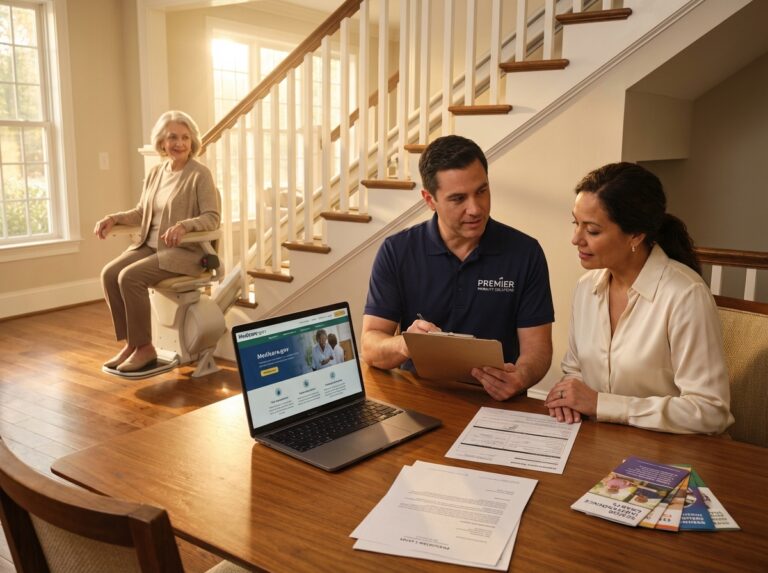
Stair lifts are a common accessibility solution, but coverage is complicated. This article explains why Original Medicare usually denies stair lift claims, highlights exceptions and Medicare Advantage options, and maps practical alternatives — Medicaid waivers, VA benefits, grants, charities, and appeal strategies — to help U.S. residents secure funding for safe home access.
Why Original Medicare typically does not cover stair lifts
Understanding the relationship between Medicare and home accessibility requires a look at the strict definitions used by the federal government. Many families assume that if a doctor prescribes a piece of equipment for safety, Medicare will pay for it. This is rarely the case for stair lifts. The central issue lies in how Medicare defines Durable Medical Equipment (DME). For an item to qualify as DME under Medicare Part B, it must meet a very specific five-part test. It must be able to withstand repeated use. It must be used for a medical reason. It must not be useful to someone who is not sick or injured. It must be used in your home. Finally, it must have an expected life of at least three years.
Stair lifts fail this test because of how they are installed and categorized. Medicare views a stair lift as a home modification rather than a medical device. This distinction is critical. Home modifications are changes made to the structure of a house to improve access. This category includes things like ramps, widened doorways, or walk-in tubs. Medicare policy generally excludes these items because they are considered improvements to the real estate. Since a stair lift is bolted to the floor or the wall of a staircase, it is seen as a permanent or semi-permanent fixture of the building. This perspective is supported by major health resources like GoodRx, which notes that current policy treats these devices as environmental changes.
The Role of Medicare Part A and Part B
Medicare is divided into different parts that cover specific types of care. Part A is hospital insurance. It covers inpatient stays, care in a skilled nursing facility, and some home health care. Part A does not cover equipment for long-term use at home. Part B is medical insurance. This is the part of Medicare that handles outpatient services and DME. If an item is approved as DME, Part B typically pays 80% of the Medicare-approved amount. The beneficiary is responsible for the remaining 20% after meeting the annual deductible. Because stair lifts do not meet the DME criteria, Part B will not provide this 80% coverage. This leaves the beneficiary to pay the full cost out of pocket. This financial reality is a significant hurdle for many seniors who live on a fixed income.
Why Stair Lifts Differ from Covered Mobility Devices
It can be confusing to see Medicare cover a $5,000 power wheelchair but refuse a $3,000 stair lift. The difference is in the primary function and portability of the device. Medicare covers wheelchairs and scooters because they are considered essential for moving around inside a home to perform basic tasks. These tasks are known as Activities of Daily Living (ADLs). They include getting to the bathroom, the kitchen, or the bed. A wheelchair is a self-contained unit that moves with the patient. A stair lift is stationary. Medicare contractors often argue that a person can avoid using stairs by moving their living quarters to the first floor. They view the ability to access a second floor as a matter of convenience or comfort rather than a medical necessity for survival. This is why you will see coverage for hospital beds or patient lifts that help someone get out of bed, but not for a device that moves them between levels of a house.
The exclusion is also documented by DME Elevators & Lifts, which explains that the lack of DME status is the primary reason for coverage gaps. Even if a doctor writes a prescription stating the lift is medically necessary to prevent a fall, the structural modification rule usually overrides that prescription. Medicare contractors follow Local Coverage Determinations (LCDs). These are sets of rules that define what is covered in specific regions of the country. Almost all of these regional rules specifically list stair lifts as non-covered items.
Consequences for Beneficiaries and Common Denials
When a beneficiary submits a claim for a stair lift, the result is almost always a formal denial. The rationale used by Medicare contractors is predictable. They will state that the item is an environmental modification. They might also claim the device is not primarily medical in nature. Some denial letters suggest that the lift is a “convenience item” because it does not treat a specific illness or injury in the way a prosthetic limb or an oxygen concentrator does. These denials can be devastating for people who have limited mobility. The lack of coverage often forces families to make difficult choices. They may have to sell their home, move into assisted living, or risk a dangerous fall on the stairs. The “hard truth” is that Original Medicare is not designed to support the costs of aging in place through structural changes.
Medicare Advantage and 2025 Policy Trends
The landscape is shifting slightly with the rise of Medicare Advantage plans. These are private insurance plans that provide Medicare benefits. As of December 2024 and into 2025, the Centers for Medicare and Medicaid Services (CMS) have given these plans more flexibility. CMS now allows Medicare Advantage plans to offer supplemental benefits that address social determinants of health. This includes home safety modifications. Some plans have recognized that paying for a stair lift is cheaper than paying for a hip replacement after a fall. According to ConsumerAffairs, some Medicare Advantage plans may offer help with these costs. However, this is not a universal rule. Each plan decides which extra benefits to offer. A plan in New York might offer a small allowance for home modifications while a plan in Florida might not. Beneficiaries must check their specific plan Evidence of Coverage to see if these benefits exist.
State Medicaid policies also vary wildly. While Original Medicare is a federal program with uniform rules, Medicaid is a joint federal and state program. Some states use Home and Community-Based Services (HCBS) waivers to pay for stair lifts. These programs are designed to keep people out of nursing homes. If a state determines that a stair lift is the only way to keep a person safe in their own home, they may approve the funding. This creates a “ZIP code lottery” where your access to mobility equipment depends on where you live.
Recommended First Steps for Beneficiaries
If you or a loved one needs a stair lift, you should not simply give up after hearing that Medicare says no. There is a specific process to follow to document your need. This documentation is essential for insurance appeals or for applying to alternative funding sources.
Obtain a Physician Assessment
Your primary care doctor must document your physical limitations in your medical record. This should include your diagnosis and your inability to navigate stairs safely. The doctor should explicitly state how a stair lift would mitigate your risk of injury.
Get an OT or PT Functional Evaluation
An Occupational Therapist (OT) or Physical Therapist (PT) can perform a home safety assessment. They will look at how you move and where the risks are. Their report is a professional clinical document. It carries significant weight with insurance companies and grant programs. They can document your history of falls and your specific limitations with daily tasks.
Document Falls and ADL Limitations
Keep a log of every time you have slipped, tripped, or felt unsteady on the stairs. Document which Activities of Daily Living are affected by your inability to use the stairs. This might include being unable to reach your shower or your bedroom.
Contact Your Medicare Administrative Contractor
You can call the contractor that handles claims for your region. Ask them for the Local Coverage Determinations regarding mobility equipment. This will give you the exact language they use to define covered items. Knowing these rules helps you understand why a claim might be denied and how to frame an appeal if you choose to pursue one. You should also review your Medicare Summary Notice if you have already had a claim denied to understand the specific reason code used.
While the hard truth remains that Original Medicare is unlikely to pay for your stair lift, having a complete medical file is the first step toward finding a solution. This documentation will be the foundation for the alternative funding strategies discussed in the next section of this guide.
Physician Medical Necessity Note Sample:
Patient is diagnosed with advanced degenerative joint disease and exhibits significant postural instability.
Due to a high risk of catastrophic falls, a motorized stair lift is medically necessary to ensure safe access to
essential living areas and to prevent injury.
Funding alternatives and step-by-step strategies to get a stair lift
Since Original Medicare does not pay for stair lifts, you must look at other programs that prioritize home safety and aging in place. Medicaid is the most common alternative for people with limited income and assets. While the standard Medicaid state plan usually views stair lifts the same way Medicare does, the Home and Community-Based Services (HCBS) waiver programs are different. These waivers are designed to keep seniors out of nursing homes by funding home modifications. If a stair lift allows you to stay in your house, the state often finds it cheaper to pay for the lift than to pay for a long-term care facility. Every state manages these waivers differently. You should search for your state Department of Health or Department of Aging website to find a list of active waivers. In California, for example, certain programs might assist with these costs if they are part of a medically necessary care plan. You can find more details on how these state-specific rules work through California Mobility. To apply, you generally need to undergo a functional assessment by a social worker or nurse and a financial screening to prove you meet the income limits. The process can take three to six months, so you should start early.
Medicare Advantage and Supplemental Benefits
Medicare Advantage plans, also known as Part C, have more flexibility than Original Medicare. As of late 2025, many plans have expanded their Special Supplemental Benefits for the Chronically Ill (SSBCI). These benefits can cover non-medical items like indoor air quality tools or home structural modifications. Some plans offer a yearly allowance for home safety that ranges from $500 to $2,500. While this might not cover the full cost of a curved lift, it can significantly lower the price of a straight model. You must check your specific Evidence of Coverage document for the current year. Look for sections labeled home environmental modifications or supplemental benefits. You will almost always need prior authorization. This requires your doctor to submit a letter explaining that the stair lift is a medical necessity to prevent falls. You can read more about how these plans differ from Original Medicare at ConsumerAffairs. If your plan denies the request, you have the right to an internal appeal, which often requires additional documentation from an occupational therapist.
Veterans Affairs Benefits
Veterans have some of the most robust funding options for home mobility. The Home Improvements and Structural Alterations (HISA) grant is the primary source for stair lifts. If your mobility issue is related to your service, you may be eligible for a grant up to $6,800. If the condition is not service-connected, the grant is typically capped at $2,000. To start this process, you must be enrolled in the VA health care system and get a referral for a home evaluation. A VA occupational therapist will visit your home to determine if a lift is the right solution. You will then need to fill out VA Form 10-0103 and submit it with at least one professional quote. Other programs like the Veteran Directed Care program allow veterans to manage their own care budgets, which can sometimes be used for equipment. The timeline for VA grants is often four to eight months because of the required inspections and paperwork.
Nonprofit and Community Resources
If you do not qualify for government programs, several nonprofit organizations offer help. Rebuilding Together is a national network that provides free home repairs and modifications for low-income homeowners and veterans. They often have local chapters that partner with skilled tradespeople to install lifts. Your local Area Agency on Aging is another vital contact point. They do not always provide direct funding, but they maintain databases of local grants and “loan closets” where you might find a refurbished lift for free or at a low cost. Organizations like Easterseals and the Muscular Dystrophy Association (MDA) provide assistance to individuals with specific diagnoses. You should also look into state Assistive Technology (AT) programs. Every state has an AT project funded by the federal government that offers low-interest loans specifically for mobility equipment. These loans often have much better terms than traditional bank loans because they are designed for people with disabilities.
Grants and Private Foundations
Private foundations sometimes offer one-time grants for home modifications. These are often specific to a disease or a geographic area. For example, some foundations focus exclusively on spinal cord injuries or multiple sclerosis. Crowdfunding has also become a practical tactic for many families. Platforms like GoFundMe or Help Hope Live allow you to raise money specifically for medical needs. Help Hope Live is a 501(c)(3) nonprofit, which means donations are tax-deductible for the donors and the funds do not count as personal income for you. This is important because it prevents the money from disqualifying you from Medicaid or SSI benefits. When setting up a campaign, you should include a clear breakdown of the costs and a note from your physical therapist about why the lift is necessary.
Financing and Tax Deductions
If you must pay out of pocket, you can use financial tools to manage the cost. Many stair lift companies offer internal financing with monthly payments. You can also look into a Home Equity Line of Credit (HELOC) if you have equity in your home. One of the most overlooked options is the IRS medical expense deduction. According to IRS Publication 502, you can deduct the cost of equipment installed in your home for medical care. This includes stair lifts. However, you can only deduct the portion of the cost that exceeds any increase in your home value. If a lift costs $4,000 and adds nothing to the resale value of the house, the full $4,000 is a deductible medical expense. You must have a written recommendation from your doctor to justify the deduction. You should keep all receipts and a copy of the contract for your tax records. More information on these costs and the lack of Medicare coverage can be found at DME Elevators & Lifts.
Realistic Cost Expectations
The price of a stair lift depends mostly on the shape of your stairs. As of 2025, a standard straight stair lift typically costs between $2,000 and $5,000 including professional installation. These units use a standardized rail that can be cut to length. Curved stair lifts are much more expensive because the rail must be custom manufactured to fit the exact turns and landings of your staircase. These usually start at $10,000 and can reach $15,000 or more. Installation for a curved lift is also more complex and takes longer. You should always ask if the quote includes the permit fees and the electrical work required to power the unit. If you only need the lift for a few months during surgery recovery, many suppliers offer rental programs for straight lifts. These usually involve a setup fee and a monthly rate of $200 to $500.
Procurement Checklist
Before you sign a contract or commit to a specific funding path, follow these steps to ensure you get a safe and reliable product.
- Measure the width of your stairs and the space at the top and bottom landings to ensure there is room for the chair to park.
- Obtain at least three written quotes from different suppliers to compare prices and equipment brands.
- Verify that the supplier is licensed, insured, and bonded in your state. Look for companies that have been in business for at least ten years.
- Check the credentials of the installers to ensure they are factory trained for the specific brand they are selling. Avoid companies that use third-party contractors.
- Never buy a lift online to install yourself; this voids most warranties and can be dangerous.
- Ask for a detailed breakdown of the warranty, specifically how long the motor and batteries are covered versus the labor for repairs.
- Inquire about a maintenance contract that includes an annual safety inspection and tune-up.
- Ask about the “buy-back” policy if you no longer need the lift in the future.
- Confirm the weight capacity of the unit to ensure it safely accommodates the user.
- Check if the lift has a battery backup so it functions during a power outage.
- If you are waiting for grant approval, ask the supplier about temporary rental options that can be converted into a purchase later.
Common logistical questions and appeal strategies
How do I appeal a denial from Medicare or a private insurer?
If your insurance company denies your request for a stair lift, you have the right to appeal. You must act quickly because there are strict deadlines for filing (usually 60 days). Your appeal should focus on how the lift will prevent more expensive medical costs. For example, explain that a fall on the stairs would lead to a hospital stay or a long-term care placement. Use the phrase “prevention of institutionalization.” Include letters from your doctor and physical therapist, along with photos of the staircase to show the danger. To move forward, look at the denial letter for the specific address where you should send your appeal and collect all your medical records from the last six months. If the first appeal is denied, you can often request a third-party review.
Appeals Opening Paragraph Sample:
I am formally appealing the denial of coverage for a stair lift for [Name], reference number 12345.
The clinical evidence provided by my physical therapist demonstrates that this device is a
medical necessity required to prevent institutionalization and ensure my physical safety
within my primary residence.
What should I do if stairs are the only barrier preventing discharge from a hospital?
This is a common crisis for families. If a patient is medically ready to leave the hospital but cannot safely enter their home, the discharge planner must help find a solution. Sometimes the hospital can access emergency funds or “bridge” grants to pay for a temporary rental. In other cases, they might suggest a short stay in a rehabilitation center while you arrange for a lift. You should speak with the hospital social worker immediately and explain the situation. Ask them about “Safe at Home” programs or local nonprofits that provide emergency mobility equipment. Do not sign discharge papers until you have a documented plan for how the patient will safely enter and move around their home.
Are rentals a good option and when should I consider one?
Rentals are a practical choice if you only need the lift for a short time. This is common for people recovering from surgery or those in hospice care. Most companies only offer rentals for straight staircases. If your stairs have a curve or a landing, a rental is usually not possible because the rail must be custom-made for your home. Rental agreements typically involve an installation fee, a monthly payment, and a removal fee. If you think you will need the lift for more than six months, buying a used or refurbished model is often cheaper than renting. To find out if this works for you, ask local dealers for a breakdown of the total cost for a six-month rental versus a permanent purchase.
Final conclusions and actionable next steps
The reality of navigating home mobility in 2025 remains a challenge for many families. While the technology for stair lifts has improved, the way Original Medicare views these devices has stayed the same. They are still classified as home modifications rather than durable medical equipment. This means the burden of funding often falls on the beneficiary. However, the hard truth does not mean there are no options. It simply means you need a more strategic approach than a standard insurance claim. Success in getting a lift covered or funded depends on your ability to prove medical necessity and your willingness to look beyond traditional Medicare Part B.
Immediate safety steps while funding is arranged
Waiting for a funding decision can take months. You cannot afford to risk a fall during this period. Your first step should be a “main floor living” plan. This involves moving the primary bedroom to a ground floor space. You might need to convert a dining room or a den into a temporary sleeping area. If a full move is not possible, you must install high-contrast tape on the edge of every step to improve visibility. Adding extra lighting with motion sensors can help prevent missteps during the night. You should also look into temporary assistive measures. A second set of banisters can provide more stability. If the stairs are the only way to reach a bathroom, consider a portable commode for the first floor. Some local medical supply shops offer stair lift rentals. This is a practical way to stay safe while you wait for a permanent grant or insurance approval. You should also establish a check-in system with a caregiver or neighbor. They should be notified every time you plan to use the stairs until a lift is installed.
While Original Medicare rarely pays for the chair portion of a stair lift, many people find success through other channels. It requires organization and a bit of grit. If you document your medical necessity and follow the funding steps in order, you have a much better chance of securing the help you need. Stay focused on the goal of maintaining your independence at home.
Sources
- Does Medicare Cover Stair Lifts in 2025? – DME Elevators & Lifts — Unfortunately, Medicare does not cover the cost of stair lifts. This is because stair lifts are not considered to be durable medical equipment according to …
- Does Medicare Cover Stair Lifts? No – GoodRx — No. Original Medicare does not cover stair lifts. Under current Medicare policy, stair lifts are viewed as home modifications and not durable medical equipment.
- Are Stair Lifts Covered by Medicare? – Options HME — The short answer is no. Stair lifts are not covered by Medicare because Medicare identifies a stair lift as a home modification rather than Durable Medical …
- Does Medicare Cover Stair Lifts? Your Guide for 2025 – Mair Agency — Medicare pays: $280 (80% of $350); You pay: $70 (20% of $350) plus the cost of the actual chair. Who Qualifies for Medicare Coverage? Medicare …
- Does Medi-Cal Cover Stair Lifts and Home Modifications? — Medi-Cal usually does not cover stair lifts unless they are medically necessary and part of a care plan. Waiver programs may help with home …
- Does Medicare Cover Stairlifts? – United Access — Original Medicare does not cover stair lifts. Medicare considers stair lifts as home modifications rather than durable medical equipment.
- Medicare coverage for stair lifts – Medical News Today — Medicare coverage does not include stair lifts, as they are considered home modifications or assistive devices rather than durable medical equipment (DME).
- Can I Qualify for a Free Stair Lift? – Lifeway Mobility — Most people are disappointed to learn that neither Medicare nor private health insurance plans typically provide coverage for stair lifts. …
- Does Medicare Cover Stair Lifts? | ConsumerAffairs® — Medicare doesn't cover stair lifts because they don't qualify as durable medical equipment (DME). · If you have a Medicare Advantage plan, you …
Legal Disclaimers & Brand Notices
The information provided in this article is for informational and educational purposes only and does not constitute professional medical advice, diagnosis, or treatment. Always seek the advice of your physician or other qualified healthcare provider with any questions you may have regarding a medical condition, mobility limitations, or recovery from surgery. Never disregard professional medical advice or delay in seeking it because of something you have read in this article.
All product names, logos, and brands mentioned in this text are the property of their respective owners. All company, product, and service names used in this article are for identification purposes only. Use of these names, logos, and brands does not imply endorsement or affiliation.